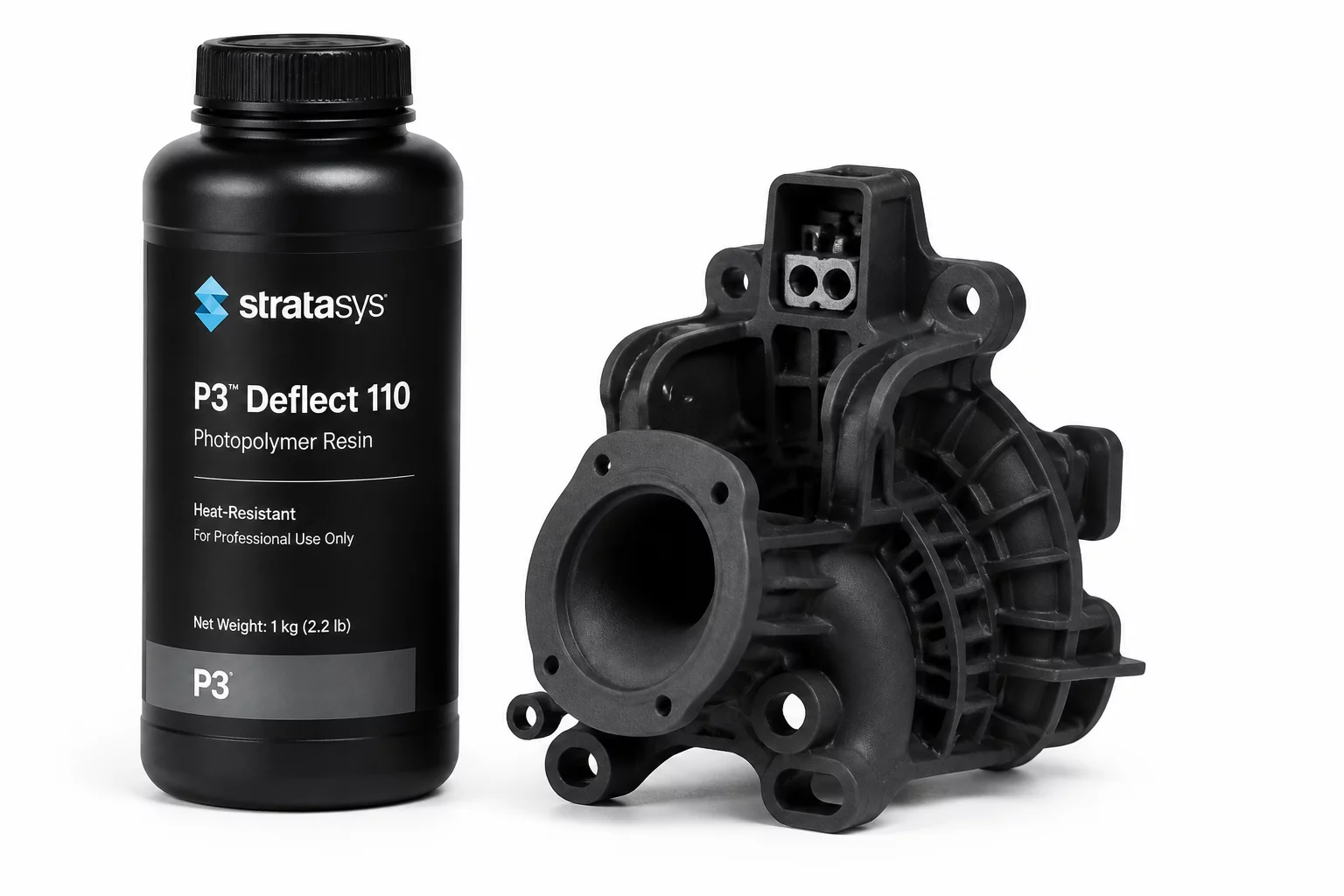
The Stratasys P3 Deflect 110 is a specialized photopolymer engineered for high-performance applications on the Origin One 3D printer. This resin is designed to bridge the gap between traditional prototyping and industrial-grade end-use parts, particularly in environments where thermal stability is paramount. In our evaluation, we focused on how the material maintains its dimensional integrity when subjected to temperatures that would cause standard resins to fail.
Thermal Resilience and HDT Performance
The standout feature of Deflect 110 is its Heat Deflection Temperature (HDT) of 110°C. During testing, we subjected printed housing units to localized heat sources. Unlike standard tough resins that often experience creep or softening around 50-60°C, the Deflect 110 remained rigid. It is important to note that this peak performance is only achieved after a thermal post-cure cycle of 60 minutes at 120°C. This secondary process ensures the polymer matrix is fully cross-linked, providing the stiffness required for demanding mechanical roles.
Surface Finish and Micro-Detail Retention
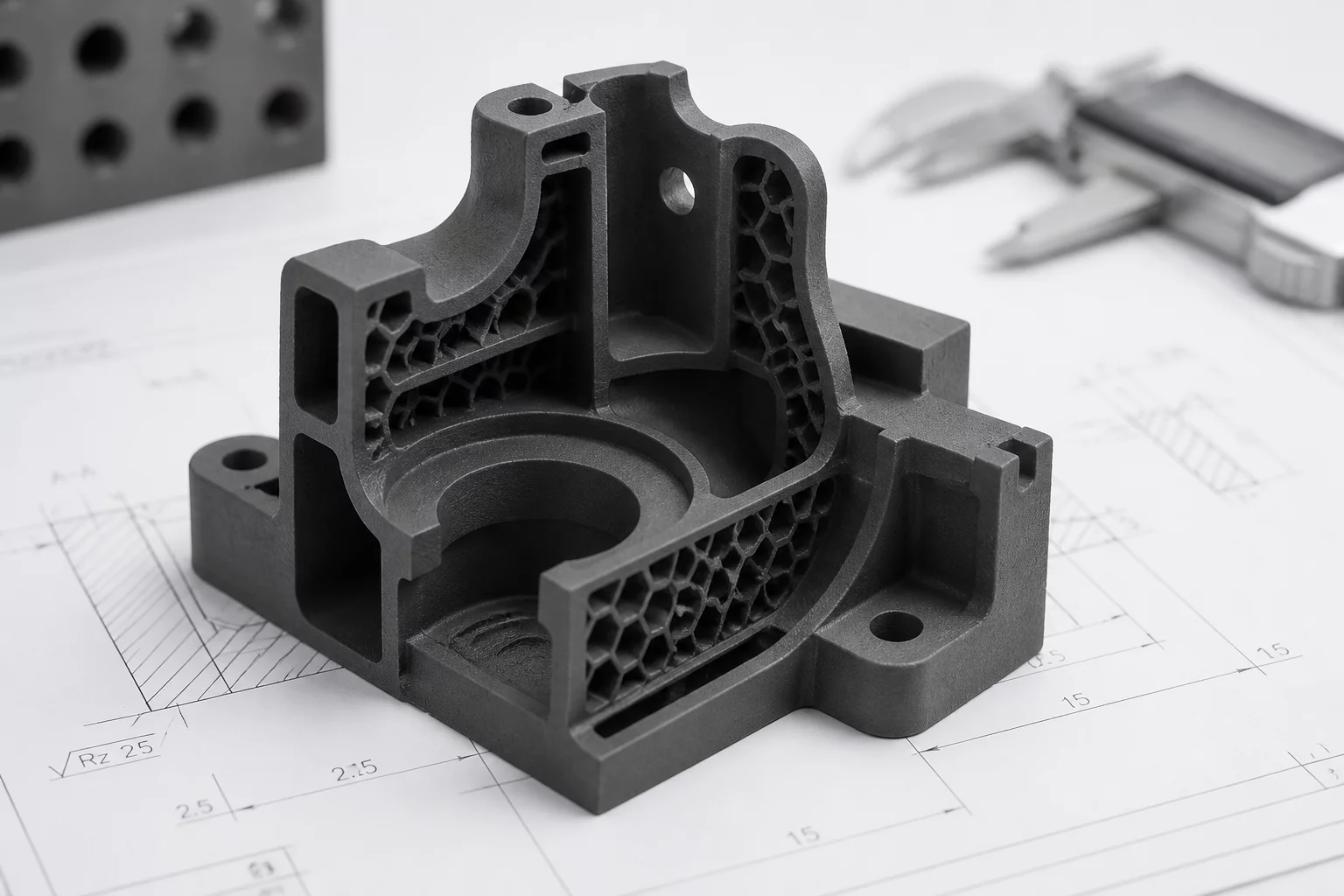
Using the P3 (Programmable Photopolymerization) process, the resin produces parts with exceptional surface quality. We observed that the vertical layer lines are virtually invisible even at 100-micron settings, thanks to the material's excellent light-blocking properties. Macro photography of a 0.5mm wall section showed crisp edges and no significant warping. For engineers designing electrical connectors or fine-pitch enclosures, the Deflect 110 offers the precision needed for tight-tolerance assemblies.
Practical Limitations and Brittleness
While the material is extremely stiff, it is also brittle. With an elongation at break of approximately 4%, it is not suitable for snap-fit joints that require significant flexing. Designers should prioritize chamfers and rounded interior corners to mitigate stress concentrations. This resin is an expert's tool—meant for static parts that need to survive heat, rather than dynamic components that require impact resistance.
Technical FAQ
Is Deflect 110 compatible with standard LCD printers?
While optimized for the P3 process, it can be used on professional 405nm monochrome LCD systems if the UV intensity is high enough and exposure times are carefully calibrated for its high viscosity.
What is the best cleaning agent for this resin?
We found that a two-stage wash in high-purity Isopropyl Alcohol (99% IPA) provides the cleanest results, followed by a thorough air-dry before the thermal cure.
Add Your Perspective