Introduction to Resin Safety
Liquid photopolymer resins used in stereolithography (SLA) and masked stereolithography (MSLA) printing are complex chemical mixtures. They contain photoinitiators, monomers, and oligomers that react under ultraviolet light. While cured resin models are generally safe to handle, the liquid form presents significant health risks. Skin contact can lead to allergic dermatitis, while inhalation of volatile organic compounds (VOCs) may irritate the respiratory system. Following strict safety protocols protects your health and keeps the printing environment clean.
1. Personal Protective Equipment (PPE)
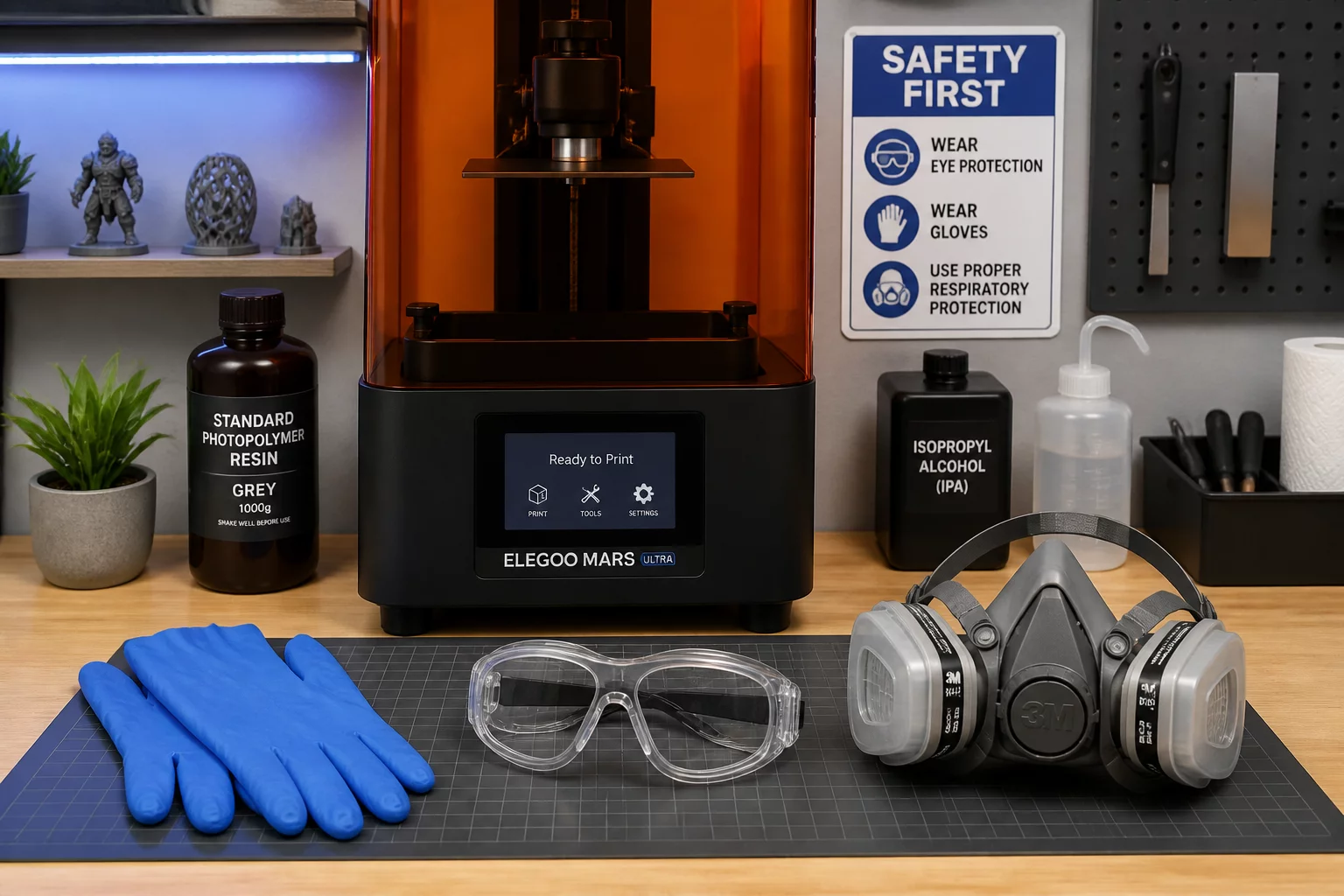
Standard household gloves are insufficient for handling liquid photopolymers. You must wear nitrile gloves with adequate thickness to prevent chemical breakthrough. Latex gloves are porous to resin monomers and do not offer proper protection.
- Nitrile Gloves: Always wear powder-free nitrile gloves when handling liquid resin, uncured prints, or cleaning alcohol. Replace them immediately if they stretch or tear.
- Eye Protection: Safety glasses or a face shield prevent accidental resin splashes from reaching your eyes during washing, support removal, or pouring.
- Respiratory Care: Use a respirator fitted with organic vapor cartridges in spaces with limited ventilation. This prevents inhalation of cumulative chemical fumes.
- Protective Clothing: A lab coat or apron prevents resin spills from soaking into standard clothing and contacting the skin.
2. Ventilation and Workspace Setup
Dedicated workspaces should separate your 3D printing equipment from living areas. Place the printer near an open window or install an active extraction fan system venting directly outdoors. Indoor air purifiers containing thick activated carbon filters help absorb chemical fumes, but they cannot replace direct ventilation. Maintain a consistent room temperature between 20°C and 25°C to keep resin viscosity optimal, minimizing drips and spills.
3. Managing Liquid Spills
Never use water to wash away uncured resin spills. Instead, wipe the liquid using paper towels soaked in isopropyl alcohol (IPA). Collect all contaminated towels in a designated container and place them in the sun or under a UV lamp to cure completely before disposal. Cured resin is inert and safe for regular trash, while liquid residue remains hazardous.
4. Disposal of Chemical Waste
Pouring liquid resin or contaminated washing solvents down the household drain violates environmental laws. Keep used isopropyl alcohol in sealed containers. Expose the containers to UV light to precipitate and cure the suspended resin particles. Once the resin separates, filter the clear alcohol for reuse and allow the solid waste to dry completely in the sun before throwing it away.
Add Your Perspective