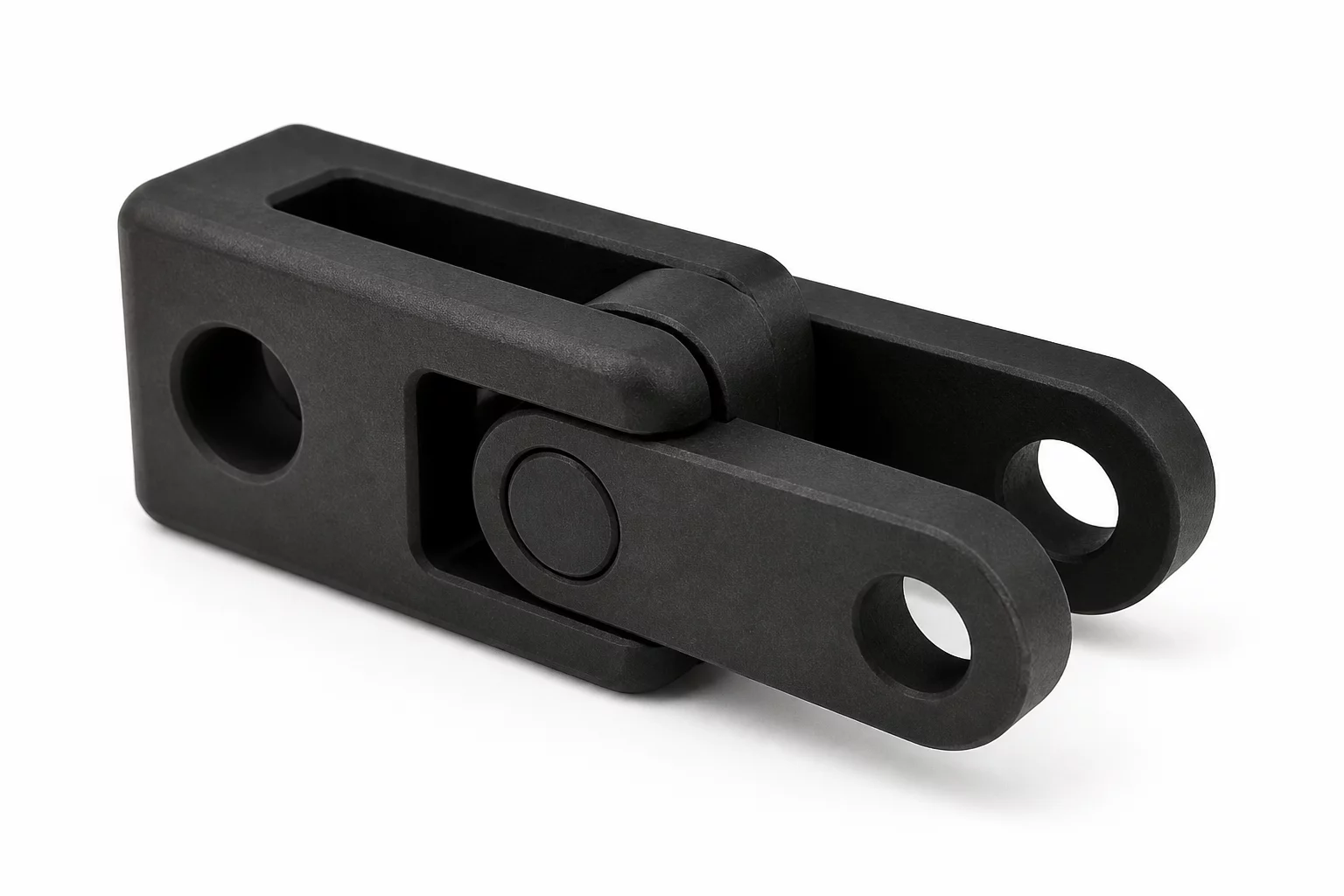
Achieving a perfect push-fit or snap-fit connection in resin 3D printing requires navigating photopolymer shrinkage and light scatter. While CAD models offer nominal dimensions down to the micron, the physical reality of liquid photopolymerization presents unique engineering challenges. This case study analyzes how these factors affect interlocking joints and outlines concrete strategies to guarantee dimensional accuracy.
The Physics of Photopolymer Shrinkage
Resin undergoes volumetric shrinkage during both the initial liquid-to-solid UV exposure phase and the subsequent post-curing cycle. This contraction alters the final dimensions of pegs, slots, and threads. Typically, internal holes or female slots shrink inward, reducing their clearance, while external pins or male joints also shrink, but sometimes expand slightly at the base due to light bleed (commonly called elephant's foot). The result is an interference fit where design clearance is completely lost.
Light Bleed and Pixel Grid Limits
Vat photopolymerization relies on an LCD screen acting as a dynamic photomask. UV light passing through these square pixels scatters as it enters the liquid resin. This phenomenon, known as light bleed, cures resin slightly beyond the intended boundaries of each layer. On a standard 50-micron pixel screen, this bleed can add 0.02mm to 0.05mm of excess cured material to all outer surfaces. This excess layer prevents interlocking joints from mating unless designers account for pixel grid offsets during the design phase or configure slicing tolerances correctly.
Proven Calibration and Design Strategies
Designers must systematically implement clearance compensations. Testing reveals that a clearance of at least 0.15mm to 0.2mm is necessary for sliding joints printed in standard resin, while high-accuracy engineering resins can achieve tight assemblies with a 0.1mm gap. Utilizing software features like 'horizontal expansion compensation' helps scale outer contours inward, successfully neutralizing the effects of light bleed without modifying the original CAD files.
Add Your Perspective