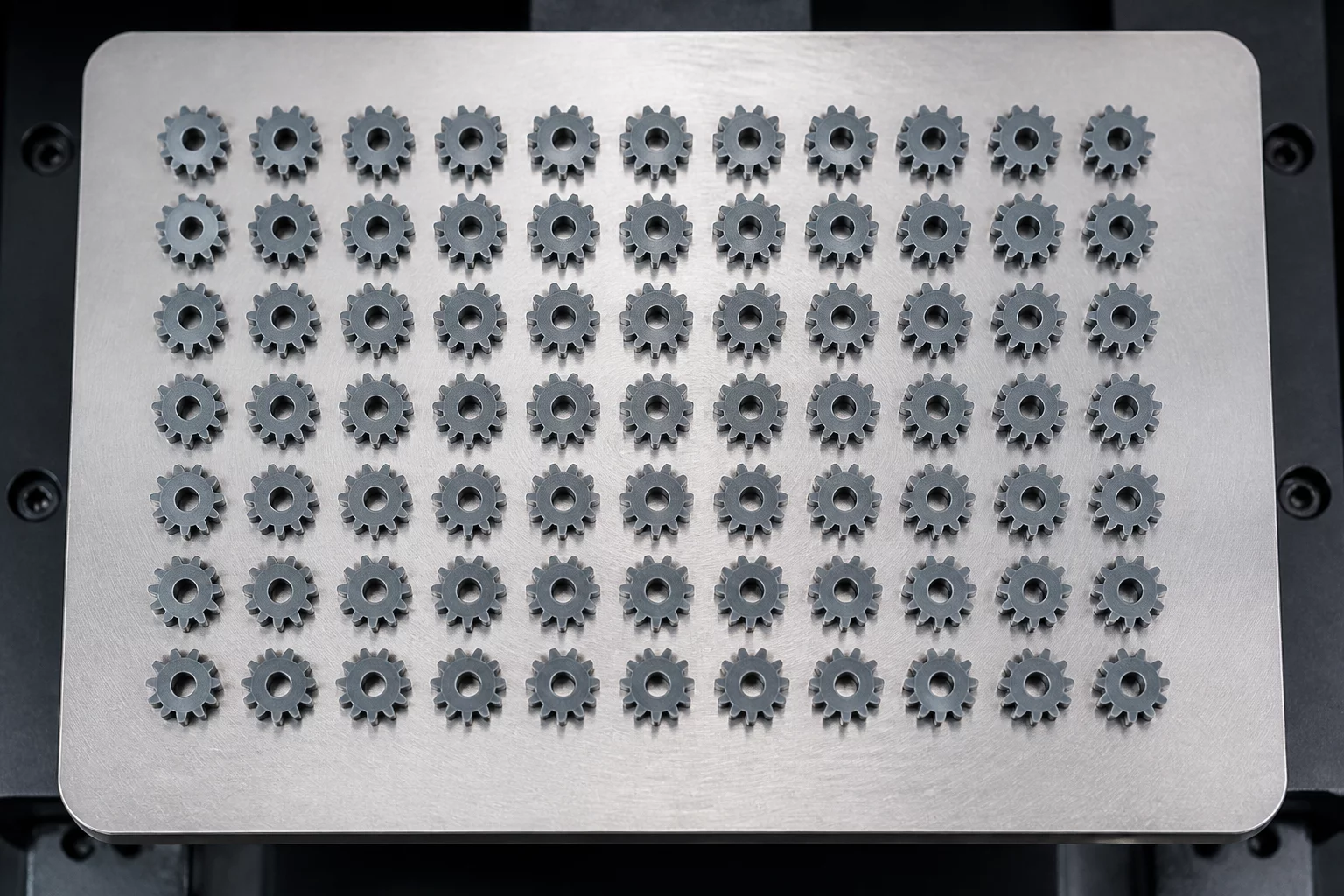
The Challenge of Batch Consistency
Resin 3D printing allows for high-throughput production of small components by utilizing the entire surface area of the build plate. However, achieving identical dimensional accuracy from the center of the LCD screen to its outer corners presents a major engineering challenge. Variations in light intensity distribution, release forces, and local heat build-up can result in slight structural discrepancies among parts printed in the same batch.
Key Factors Influencing Repeatability
Several variables must be controlled to ensure uniform results across the entire platform layout:
- Light Uniformity: Standard LCD screens often exhibit a drop in UV intensity near the edges. Applying a compensation profile helps distribute exposure energy evenly.
- FEP Film Tension: Pull forces are typically higher in the center of the vat. Optimizing lift heights and speeds prevents deformation of parts located in high-stress zones.
- Resin Temperature: Consistent viscosity is critical. A fluctuation of just a few degrees can alter curing depth, directly impacting the final dimensions of micro-gears or connectors.
Optimization Strategies
To secure maximum repeatability, print technicians must implement a standardized pre-print calibration routine. First, verify Z-axis levelness using multi-point measurements across the build plate. Second, employ fine-tuned exposure times that prioritize detail retention over speed. Additionally, placing dummy support structures near high-density clusters can redistribute suction forces, shielding fragile parts from excessive peel stress.
Add Your Perspective