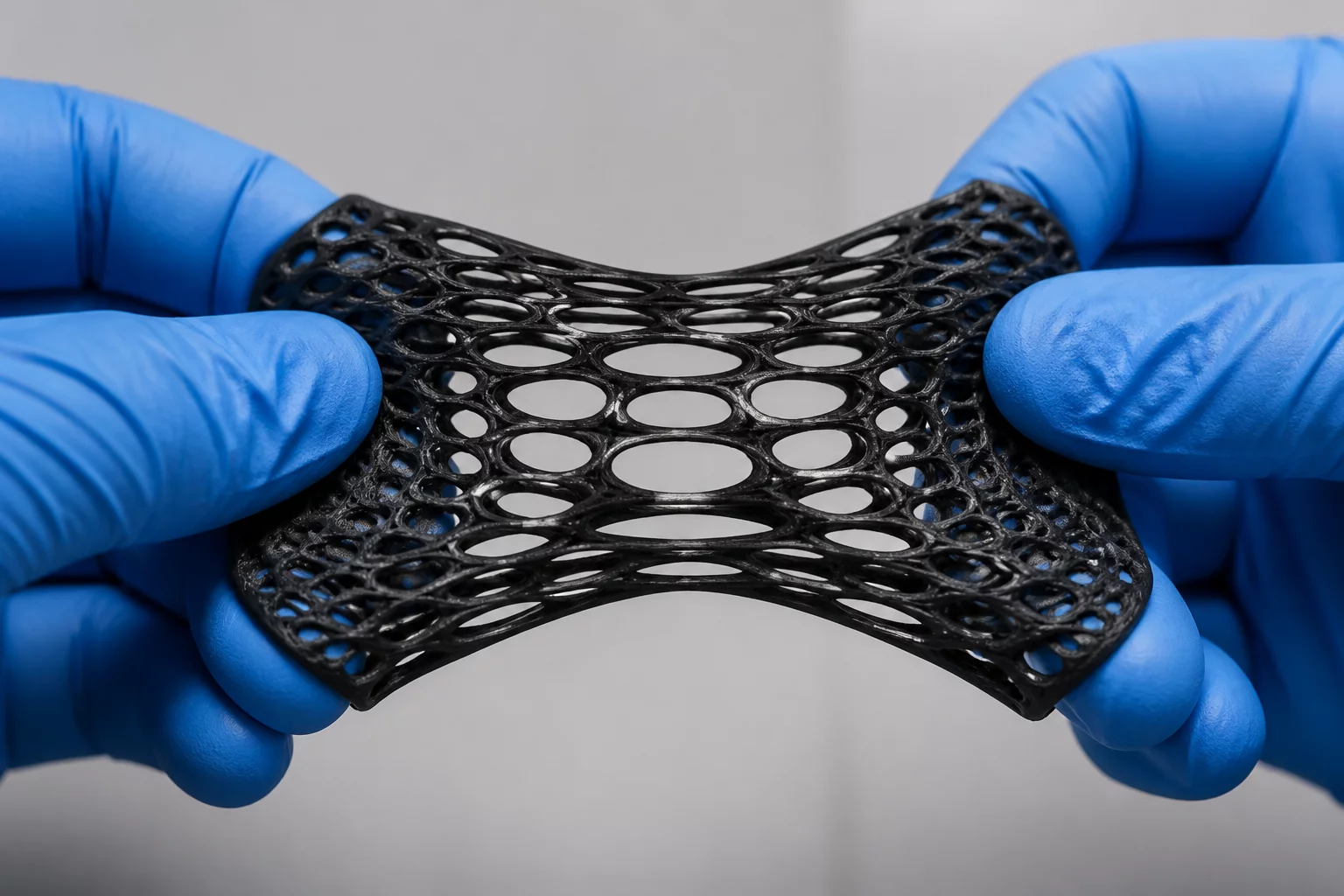
Flexible photopolymers have revolutionized the production of functional prototypes, consumer goods, and custom gaskets. However, flexible resin tear resistance remains a primary engineering bottleneck. Without proper calibration, parts printed with elastomer-like materials can easily tear along layer lines or at stress concentration points. This study evaluates the tensile limits, elongation at break, and physical tear propagation of common flexible formulations under real-world loading conditions.
Testing Methodology and Tear Propagation
To measure the tear strength of elastomeric prints, we utilized standard ASTM D624 trouser tear specimens. The parts were printed on a monochrome LCD printer using a 50-micron layer height. We tested two primary print orientations: flat (parallel to the build plate) and vertical (perpendicular to the build plate). The results showed a significant anisotropic behavior. Vertically oriented prints exhibited a 35% reduction in tear resistance due to microscopic delamination between layers under shear stress. Flat-oriented prints dispersed the force more evenly across the cured polymer chains, resulting in cleaner stretching without premature failure.
Key Variables Influencing Tear Resistance
Achieving maximum durability from flexible resins requires balancing several printing and post-processing variables. Here are the most critical factors:
- Exposure Time: Under-exposure leads to weak interlayer bonding, while over-exposure makes the resin brittle and reduces its overall elasticity.
- Post-Curing Duration: A controlled UV bath is mandatory. Over-curing degrades the elastomer's flexible segments, significantly lowering its tear thresholds.
- Washing Residue: Remaining liquid resin or solvent trapped in fine details acts as a stress concentrator, initiating tears under load.
- Geometry and Fillets: Sharp internal corners are highly susceptible to stress concentration. Incorporating small fillets (at least 1.5mm radius) drastically improves tear survival rate.
Optimizing Post-Curing in Water
Our study confirmed that post-curing flexible prints while submerged in clean water prevents oxygen inhibition on the surface. This technique ensures a non-sticky, completely polymerized outer skin, increasing surface tear resistance by up to 18%. Oxygen in the air inhibits the free-radical polymerization process of acrylic groups, leaving a microscopic layer of partially cured resin that acts as a starting point for cracks.
Frequently Asked Questions
Why does my flexible print tear so easily at the support touchpoints?
Support removal leaves small pits or bumps that act as micro-notches. When the print stretches, stress concentrates at these points, initiating a tear. We recommend using very light, dense supports and removing them prior to post-curing under warm water to minimize surface damage.
Can I mix flexible resin with standard rigid resin to increase toughness?
Yes, blending flexible resin (up to 15-30%) with standard rigid resin is a common technique to reduce brittleness. However, ensure both resins are compatible (same manufacturer or chemistry) and thoroughly mixed to prevent phase separation during printing.
Add Your Perspective