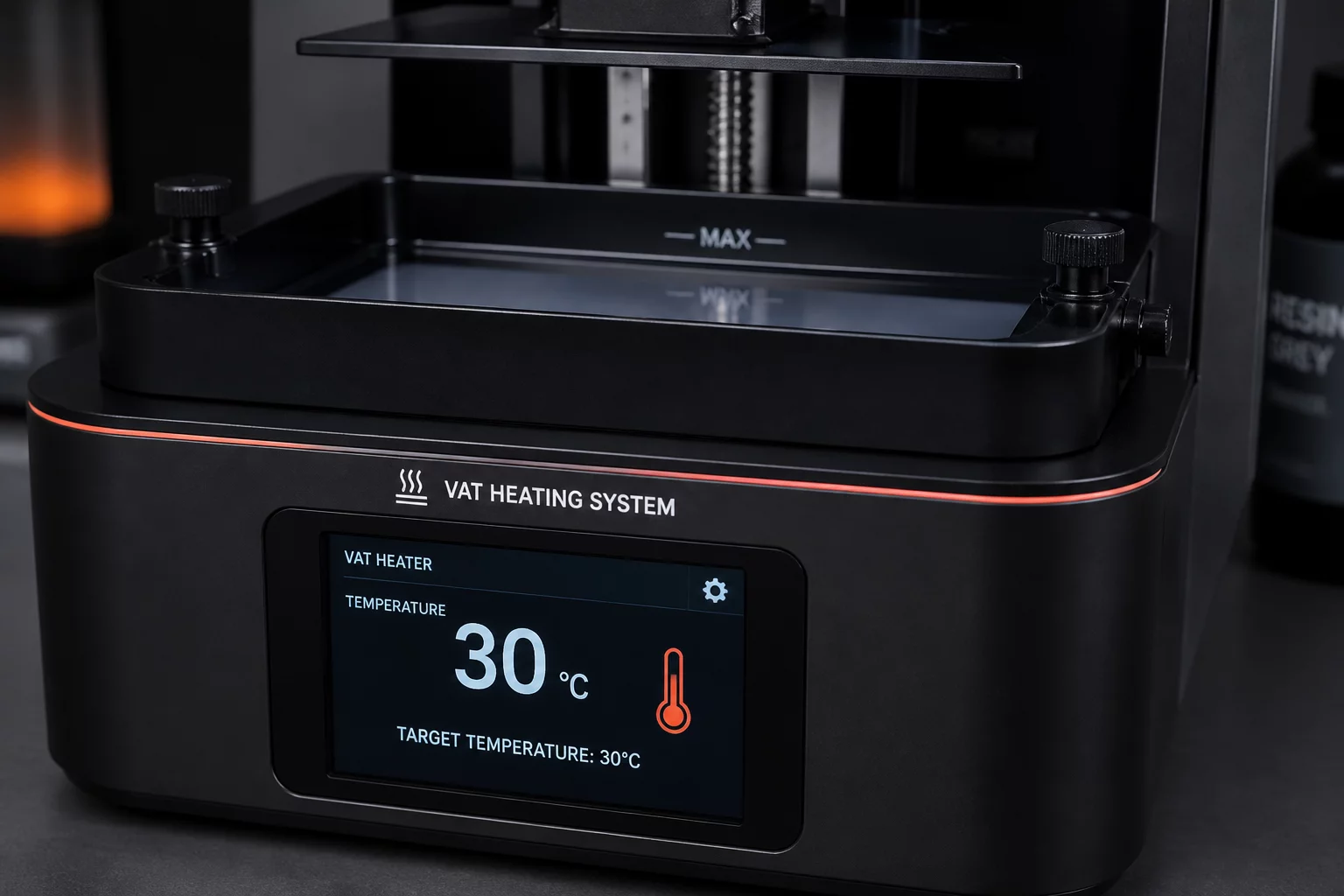
Why Temperature Dictates Resin Viscosity
Photopolymer resins are highly sensitive to thermal variations. When the ambient temperature drops below 20°C, the fluid's viscosity increases significantly. Thicker resin flows slowly, hindering the self-leveling process after each build plate lift. This delays layer formation and leads to delamination, suction failures, and loss of fine details.
The Optimal Thermal Range for High-Precision Printing
For most standard and engineering photopolymers, the ideal operating window lies between 25°C and 30°C. Maintaining this range ensures the resin remains fluid, enabling rapid settling and consistent curing dynamics. UV light penetrates and initiates polymerization more uniformly when molecules can move freely in a less viscous liquid.
Practical Methods for Heat Management
You can control the vat temperature through several practical methods:
- Vat Heaters: Enclosed silicone heater bands wrapped around the resin vat provide direct, localized heating.
- PTC Chamber Heaters: Compact ceramic heaters blow warm air inside the printer cover, maintaining ambient warmth.
- Preheating Resin: Safely warming the resin bottle in a warm water bath before pouring it into the vat helps jumpstart the process.
Frequently Asked Questions
Q: Can resin get too hot?
Yes, temperatures exceeding 35°C can cause excessive light bleed, reducing detail crispness and potentially accelerating VAT film wear.
Q: How long should I preheat the chamber?
Let the chamber warm up for at least 15 to 20 minutes before starting a print job to ensure thermal equilibrium.
Add Your Perspective